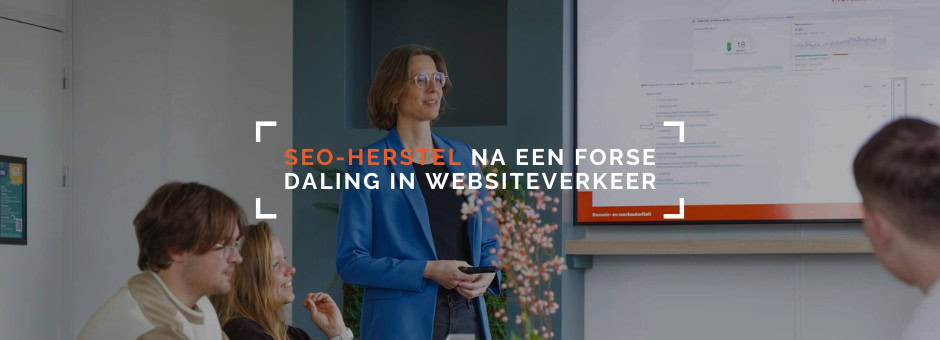
Has your organic traffic suddenly dropped? Naturally, you’ll want to recover it as quickly as possible. The good news is that, depending on the cause, a large proportion of the lost traffic can often be recovered. But to do so, you need to know what the problem is. In this article, you’ll learn how to identify the cause of a drop, what to check in Google Search Console, and what SEO recovery looks like following a migration or Google update. Navigate to: Step 1:
Are you investing in SEO, but not seeing that translate into better leads? That usually doesn’t mean that SEO ‘doesn’t work for your sector’. B2B customers search, compare and make decisions differently to consumers. In this article, we discuss the five biggest pitfalls in B2B SEO and reveal where the opportunities for organic growth actually lie. B2B SEO pitfalls in a nutshell Why B2B SEO works differently With B2B SEO, it’s not just about being found. It’s about

Business customers are increasingly using AI to research options. They ask detailed (and sometimes highly specific) questions of ChatGPT, Claude and Google AI Mode. The answers they receive determine which companies stand out and which ones disappear from view entirely. Is your company not mentioned, whilst competitors are visible? If so, you’re missing out on a crucial touchpoint in today’s customer journey. GEO for B2B in a nutshell: Generative Engine Optimisation (GEO) is optimisation for AI. You investigate which questions people

Imagine this: your target audience asks ChatGPT for a recommendation in your market. The model provides an answer. It mentions three brands. Yours isn’t one of them. That’s no coincidence, and it can’t be fixed with a better meta description or an extra blog post. AI models such as ChatGPT and Gemini base their answers on reliable, independent sources – both from their training data and through live web searches. They don’t look at what you write about yourself on your own website. They look at

ChatGPT is the best-known AI chatbot worldwide, and for good reason. The model excels in text generation, brainstorming, analytics and even code. But that doesn't always make it the best choice for a specific task. Sometimes another AI tool is a better fit. For example, if you value low cost, factual accuracy or direct interfacing with Microsoft 365 more. In such cases, a ChatGPT alternative can be handy. We tell you the 7 strongest ChatGPT alternatives for 2026. By tool

Several times a year, Google carries out what is known as a core update. And there have already been several major updates of this kind in the past. Which websites are generally affected by these updates? How can you determine whether a drop in rankings is actually linked to a core update? What should you do if such an update affects your website? And last but not least: shouldn’t we actually be making preventative improvements to websites? Algorithmic updates: Google makes changes to its algorithm every day,

In April 2026, I stood on the brightonSEO stage for the first time. After months of preparation, it was finally here. A little bit of nerves beforehand, but as soon as I was on stage that completely disappeared. The room was packed, the reactions during and after the presentation were good and the topic clearly struck a chord: SEO migrations that go wrong, and how to fix them afterwards. I wasn't the only one talking about migrations. Dave Cousin had a

The peak period of 2026 starts today The peak period is over, the sales have been counted. As you take stock, the next big change is already underway. The way consumers discover products is shifting at record speed from the search bar to a conversation with an AI. Imagine the customer of 2026. Who no longer taps in ‘football boots size 43’, but asks, “I'm looking for durable football boots for a fast outdoor player who plays on artificial turf.” At that point, the

Your webshop is up, the navigation structure is built, the product category pages are filled and now? How do you make sure the product detail page (pdp) is good in terms of usability and optimised for search engines? A webshop often has thousands of product pages and we see with great regularity that it is precisely these pages that come up as so-called thin-pages or low-content pages. This means that the product page contains too little content for search engines to be indexed properly. More importantly, the user of the

Get in touch! :) we are happy to help you with all your SEO questions
SEO questionSubscribe to our newsletter and don't miss a single SEO tip
"*" geeft vereiste velden aan
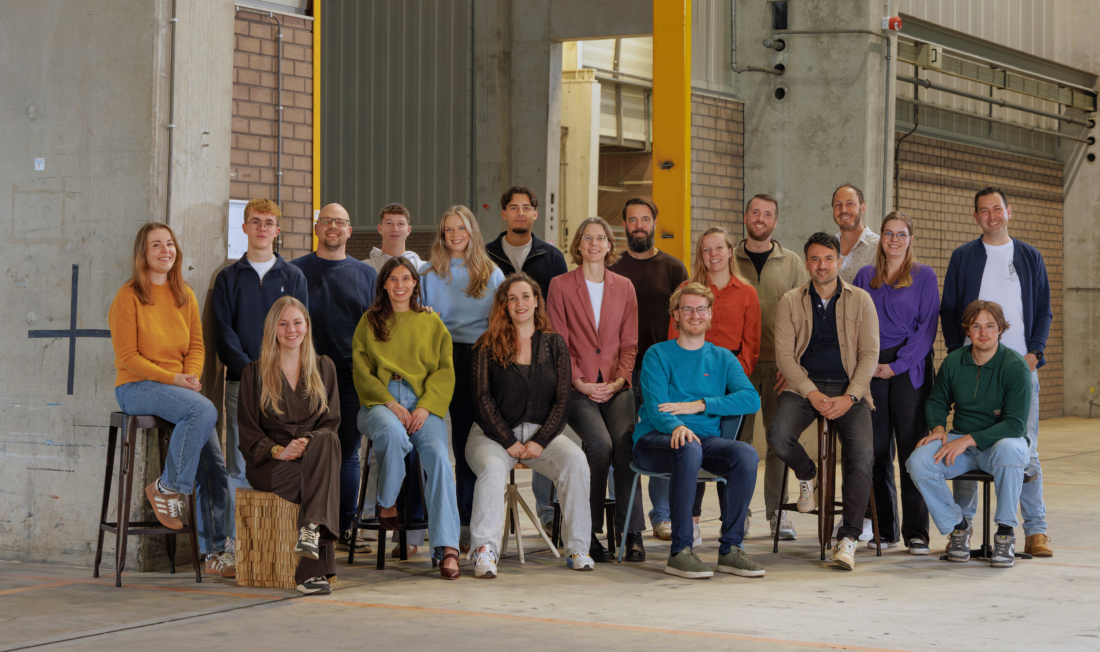
Our team consists of enthusiastic SEO specialists who are happy to work with you for the best results.






 Dutch
 English